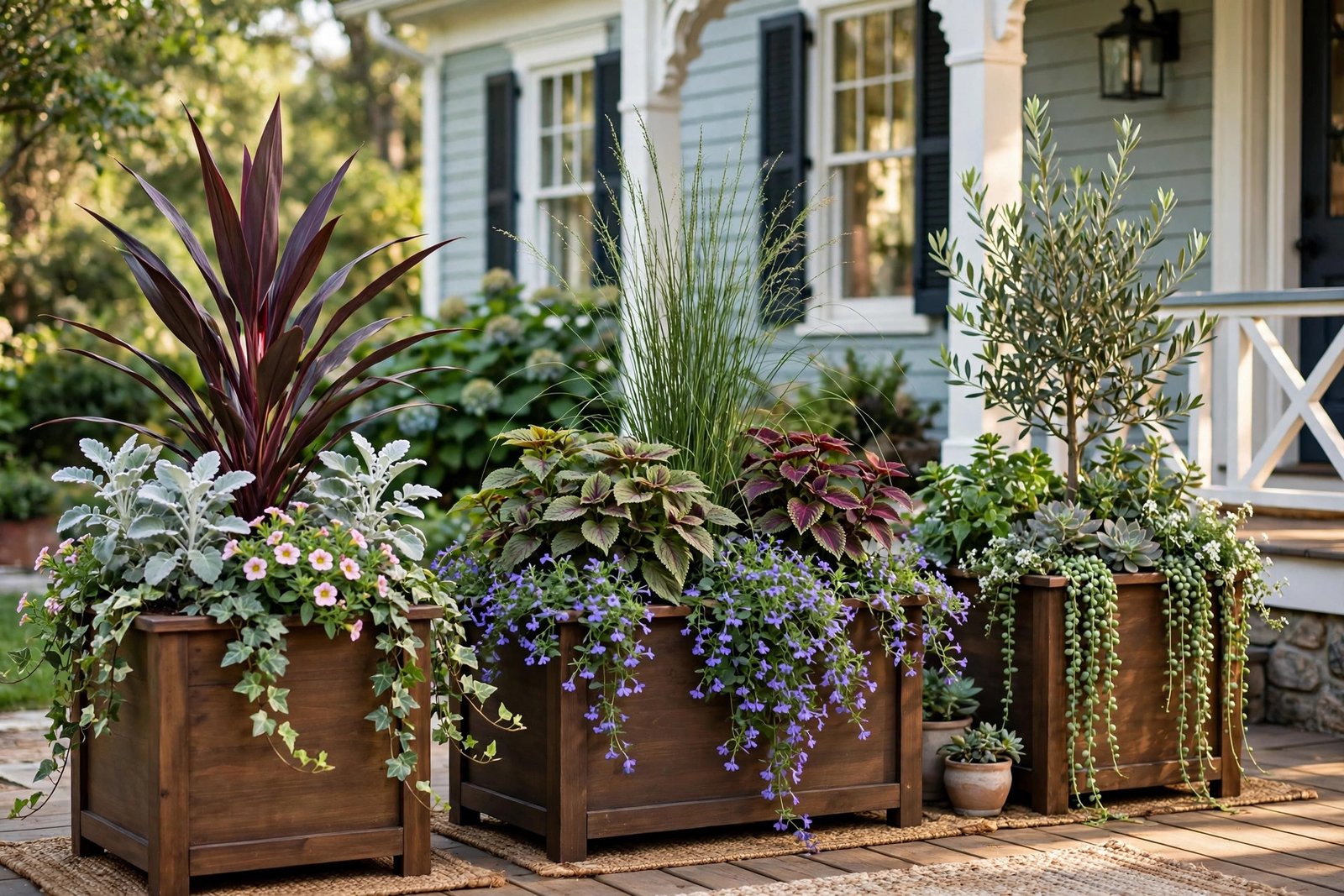
There is a reason the front of a professionally landscaped home stops you in your tracks. It is rarely one grand gesture. More often, it is the quiet polish of planters — boxes of green and bloom so perfectly layered they look effortless. That pro look is not a secret. With the right formula, the right plants, and a few placement tricks, you can style outdoor planter boxes that rival anything a landscaper would install. Here is exactly how.
The Thriller-Filler-Spiller Formula
Professional landscapers almost never plant a container with a random assortment of flowers. They rely on a simple three-part recipe called thriller, filler, spiller. Once you understand it, every planter box you style will look intentional and balanced.
The Thriller: Your Vertical Star
The thriller is the tallest plant in the arrangement, the one that gives your planter box height and drama. Place it slightly off-center toward the back of the box so the arrangement has depth. Great thriller choices include ornamental grasses like purple fountain grass, tall snapdragons, upright cannas, or even a compact evergreen shrub such as a dwarf spruce for year-round structure. One thriller per box is usually enough; it anchors everything else.
The Filler: Lushness in the Middle
Fillers are mounding plants that pack out the middle of the box and hide the soil beneath a carpet of color and texture. Think petunias, geraniums, begonias, lantana, or coleus for shade. Plant several around and in front of the thriller, a few inches apart, so they grow into one seamless mass. Mixing two or three complementary varieties — white bacopa with coral impatiens, for instance — creates the rich, layered look you see in professional designs.
The Spiller: The Finishing Cascade
Spillers are trailing plants that drape over the front edge of the box, softening its outline and adding that romantic, overflowing feeling. Classic spillers include sweet potato vine, ivy, calibrachoa (million bells), lobelia, and string of pearls in warmer climates. Plant them right along the front edge of the box so the vines tumble naturally. When the spillers start to cascade, the whole planter takes on that abundant, established look pros charge a fortune for.
Choosing the Right Planter Boxes
The box itself does half the styling work before a single plant goes in. Scale, material, and color all shape the final effect, so choose with the same care you would choose a piece of furniture.
Size and Proportion Matter
A planter box should be generous. Boxes at least 10 to 12 inches deep give roots room to grow and keep soil from drying out too fast. For entryways and patios, bigger reads better: a slightly oversized box looks high-end, while a tiny crammed one looks fussy. As a rule of thumb, the planter should be roughly one-third to one-half the height of the railing, wall, or window it sits beside.
Materials That Age Beautifully
Cedar and redwood boxes bring warmth and weather to a silvery gray patina — perfect for cottage and farmhouse styles. Painted wood or fiberglass in matte black, charcoal, or deep green looks crisp and modern. Metal planters in zinc or corten steel suit contemporary homes. Whatever you choose, the box needs drainage holes; if it has none, drill them. Soggy roots are the fastest way to ruin a beautiful arrangement.
Color Choices That Elevate Your Home
Let the box complement your home’s exterior rather than compete with it. White boxes pop against dark siding and brick; matte black looks striking on modern gray facades and pale stucco. Natural wood works with almost everything. If you want the plants to be the star, choose a neutral box color and let the blooms carry the color story.
Plant Selection by Season and Sun
Even the best formula fails with the wrong plants. Matching your selections to your light conditions and the season is what separates thriving planters from sad ones.
Sun-Loving Combinations
For boxes that get six or more hours of direct sun, lean on heat-tolerant performers. Try a thriller of purple fountain grass or red spike, fillers of lantana, verbena, and portulaca, and spillers of sweet potato vine and trailing vinca. These plants laugh at summer heat and keep blooming with minimal fuss. Warm colors — oranges, reds, golds — glow in full sun and look spectacular against a house facade.
Shade-Friendly Options
North-facing porches and shaded patios are no excuse for empty boxes. Shade stars include impatiens, begonias, coleus, torenia, and caladium. Use a thriller of upright ferns or a shade-tolerant ornamental grass, fillers of mixed begonias and coleus in burgundy and lime, and spillers of ivy and lobelia. Cool whites, soft pinks, and chartreuse foliage light up shadowy corners beautifully.
Seasonal Swaps to Stay Fresh
Pro landscapers refresh containers two to three times a year, and you can too. Spring calls for pansies, tulip and daffodil bulbs tucked in the fall before, and sweet alyssum. Summer is for bold tropicals and heat lovers. Fall planters shine with mums, ornamental kale, pansies, and trailing ivy. Winter boxes can stun with evergreen boughs, red twig dogwood branches, pinecones, and white lights. Treat your planter boxes as rotating seasonal displays, not one-and-done projects.
Soil, Drainage, and Planting Basics
Great planters start below the soil line. Even the most beautiful plants will struggle in poor soil, so give them a proper foundation.
The Right Potting Mix
Never fill planter boxes with garden soil — it compacts, drains poorly, and suffocates roots in containers. Use a high-quality potting mix formulated for containers, and mix in a slow-release granular fertilizer at planting time. For extra insurance against waterlogging, you can blend in a handful of perlite or coarse sand. Fill the box to about an inch below the rim so water does not run off the top.
Drainage Done Right
Every planter box needs drainage holes — at least one every 12 inches along the bottom. If the box sits on a deck or porch floor, raise it on small feet or pot risers so water can escape and wood does not rot. A layer of landscape fabric over the holes keeps soil in while letting water out. Skip the old advice about gravel at the bottom; it impedes drainage rather than helping it.
Placement Ideas That Transform Your Home’s Exterior
Where you put your planter boxes changes how your whole home feels. Think of them as outdoor jewelry: placed right, they draw the eye exactly where you want it.
Flanking the Front Door
Nothing says “welcome” like a matching pair of planter boxes on either side of the entry. Symmetry here is your friend — identical boxes with identical plantings frame the door and create a formal, high-end look. For a more relaxed cottage feel, you can mirror the thriller and spiller but vary the filler colors slightly between the two.
Window Boxes With Curb Appeal
Window boxes are pure charm. Choose boxes that span the full width of the window and mount them just below the sill. Because window boxes are shallow, prioritize spillers and compact fillers so the arrangement does not overwhelm the window. Water window boxes more often — their small soil volume dries out fast, especially in sun.
Patio and Porch Groupings
On patios, group planter boxes in odd numbers — threes and fives — at varying heights for a designer look. Use a large box as the anchor, then cluster smaller ones beside it. Repeating the same thriller or the same color palette across the group ties everything together. Corner placement works especially well: boxes tucked into porch corners soften hard angles and make the space feel larger.
Maintenance Tips for Long-Lasting Planters
The difference between a planter that looks good for two weeks and one that thrives all season is a small, consistent maintenance routine.
Watering Wisely
Containers dry out far faster than garden beds. In summer heat, most planter boxes need watering once a day, sometimes twice. Water early in the morning so foliage dries before nightfall, which reduces disease. Stick a finger an inch into the soil — if it is dry, water deeply until it runs from the drainage holes.
Feeding Your Plants
Container plants are heavy feeders because watering washes nutrients out of the potting mix. Start with slow-release fertilizer at planting, then supplement with a diluted liquid fertilizer every one to two weeks during peak growing season. You will notice the difference within days: deeper greens, more blooms, and fuller growth.
Deadheading and Pruning
Snip off spent flowers regularly to keep plants pushing out new blooms. Trim back leggy spillers by a third mid-season to encourage bushy growth, and remove yellowing leaves promptly. Ten minutes of grooming a week keeps your planters looking freshly planted from spring through fall.
Frequently Asked Questions
How many plants do I need for one planter box?
For a lush, professional look, plan on one plant per 6 inches of box length — so a 36-inch window box needs about six plants, plus spillers along the front edge. It will look slightly crowded at planting time, but containers fill in fast, and a full box from day one is exactly the abundant look you are after.
What is the best soil for outdoor planter boxes?
Use a premium container potting mix, not garden soil. Look for mixes containing peat moss or coco coir, perlite, and compost, and choose one with slow-release fertilizer included. Refresh the top few inches of mix each season, and replace the entire mix every one to two years to keep plants vigorous.
How do I keep my planter boxes from drying out in summer?
Start with the largest box your space allows — more soil means more moisture reserve. Add mulch on top of the soil, water deeply in the morning, and consider self-watering reservoirs or drip irrigation for boxes in full sun. Grouping planters together also creates a slightly more humid microclimate that slows evaporation.
Can I reuse the same planter boxes year after year?
Absolutely — quality boxes last many seasons. At the end of each growing season, empty the old plants, scrub the box with a mild bleach solution to kill lingering disease, and let it dry completely before storing. Refresh or replace the potting mix in spring, check drainage holes, and replant. Cedar boxes benefit from a coat of exterior wood oil every couple of years.
Conclusion
Styling outdoor planter boxes like a pro is not about talent or expensive plants — it is about a repeatable formula. Remember thriller, filler, spiller, choose boxes with good bones and proper drainage, match your plants to your light and season, and give everything a little weekly care. Do that, and your planters will deliver the polished, welcoming look that makes professionally landscaped homes so hard to drive past. Your front porch, patio, and windows are waiting — time to plant something beautiful.