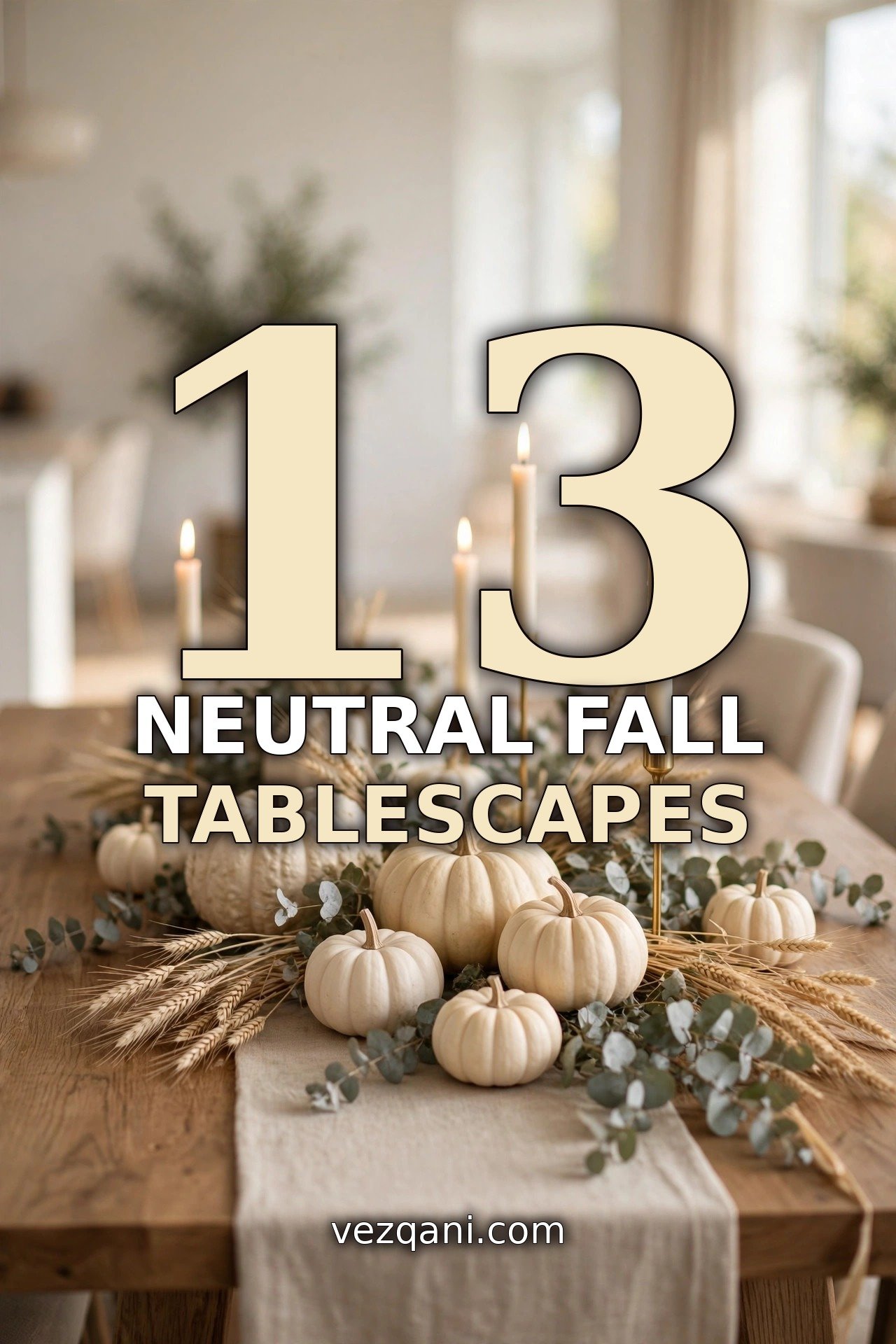
Calm Tables, Big Season
You know that feeling when you walk into a room and everything just looks… expensive? Not loud, not flashy — just calm, considered, and quietly confident. That’s exactly what a neutral fall tablescape does for your dining table: creams, beiges, linen, and wheat tones layered in a way that makes people lean in and ask how you did it.
The beauty of a neutral fall table is that it works with the home you already have. Take the ideas below that fit your style, layer a few together, and you’ve got a table that feels like a deep breath in the middle of the busy fall season.
The Beige Linen Runner, Laid First
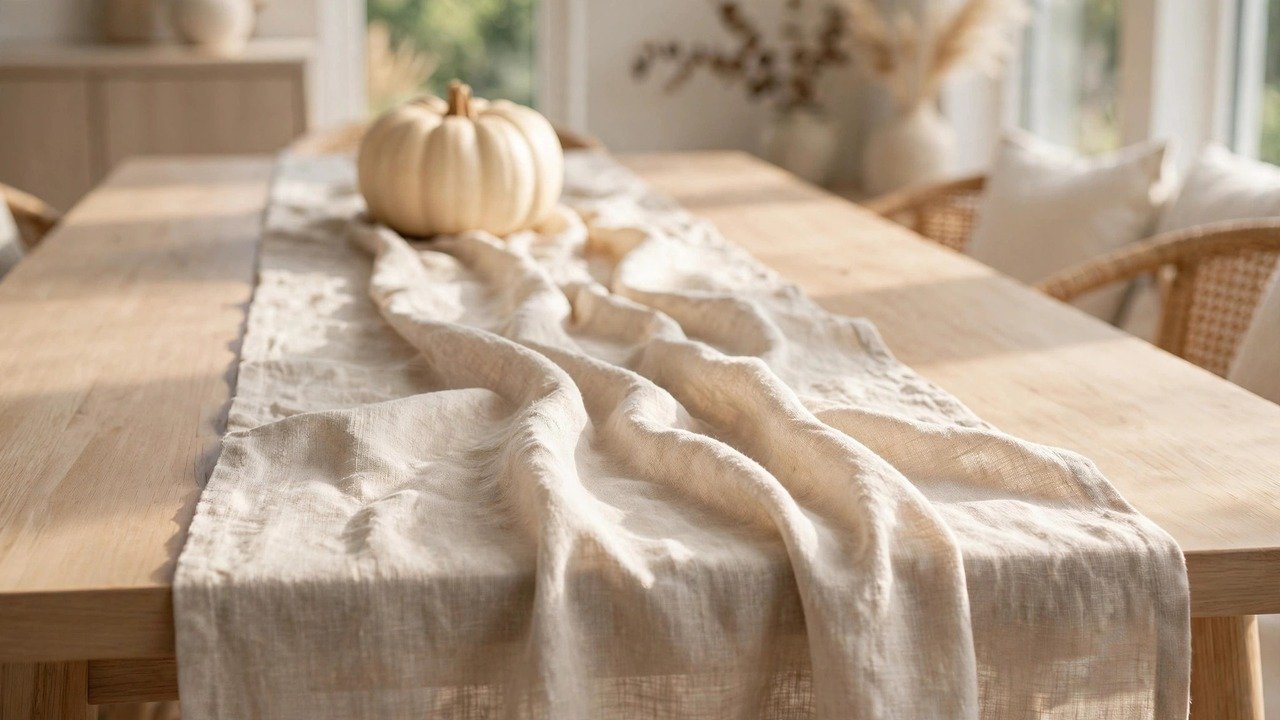
In the image below, a long beige linen runner sits centered down a light wooden dining table, its soft folds catching bright natural daylight. A single cream pumpkin rests at the far end — that’s it. One runner, one pumpkin, and the whole table already looks styled. Start with the textile, not the decorations. A washed, natural linen in beige or oatmeal instantly gives you that quiet-luxury foundation.
This look suits you if your table itself is beautiful and you don’t want to cover it up — a light oak or whitewashed wood deserves to show around the edges. Why it works: the runner creates a visual path down the center of the table, anchoring every piece you’ll add later. To recreate this look, buy a runner at least two feet longer than your table so the ends drape softly, and don’t iron it — the rumpled, lived-in folds are the whole point.
A Cluster of Creamy White Pumpkins
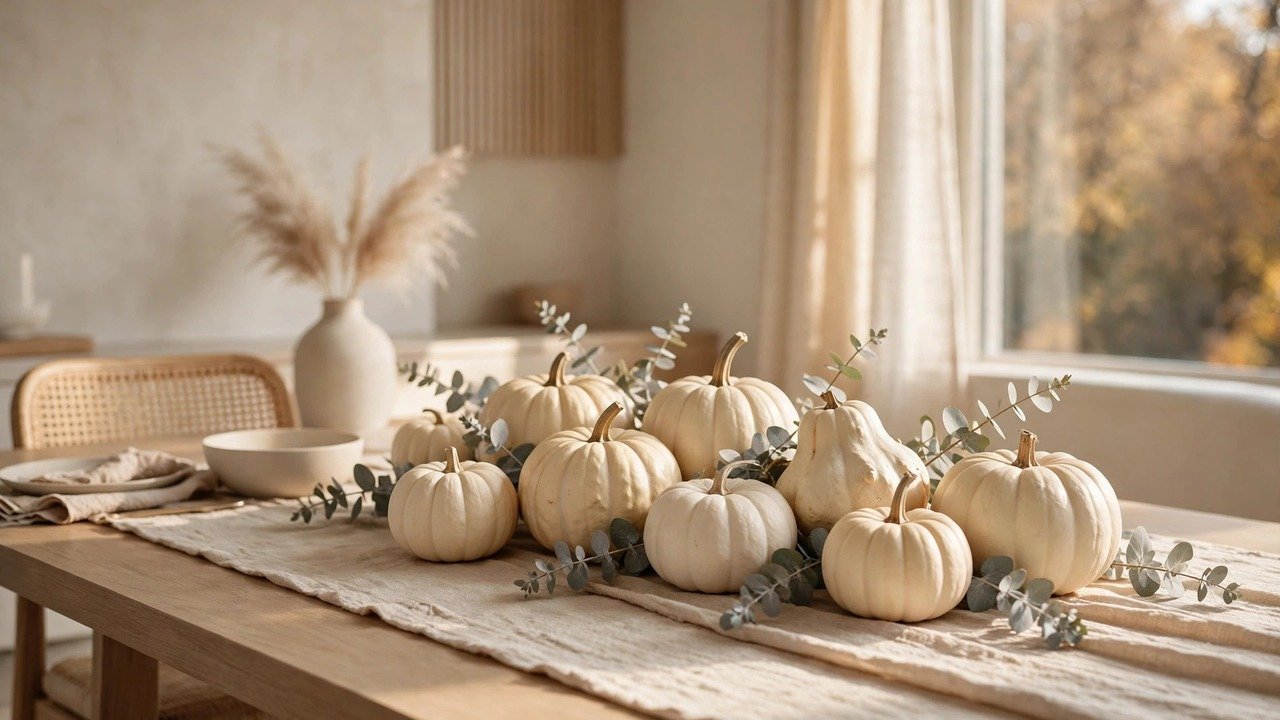
The image below shows a low grouping of cream and white pumpkins in varied sizes and shapes running down the table center, with eucalyptus sprigs tucked between them. Nothing is symmetrical, nothing matches perfectly — and that’s precisely what makes it look expensive. Mix sizes, shapes, and finishes. Combine smooth heirloom-style pumpkins with ribbed ones and a few squat white minis; the variety reads as collected over time.
This idea suits anyone who wants instant fall impact with almost zero skill required — you genuinely just arrange and walk away. Why it works: keeping every pumpkin in the cream-to-white family lets the shapes and textures do all the talking, so the eye moves along the row without getting stuck. To recreate this look, use an odd number of pumpkins (five or seven reads best) at varied heights, then tuck the eucalyptus in last to fill any gaps.
The Low Eucalyptus Garland
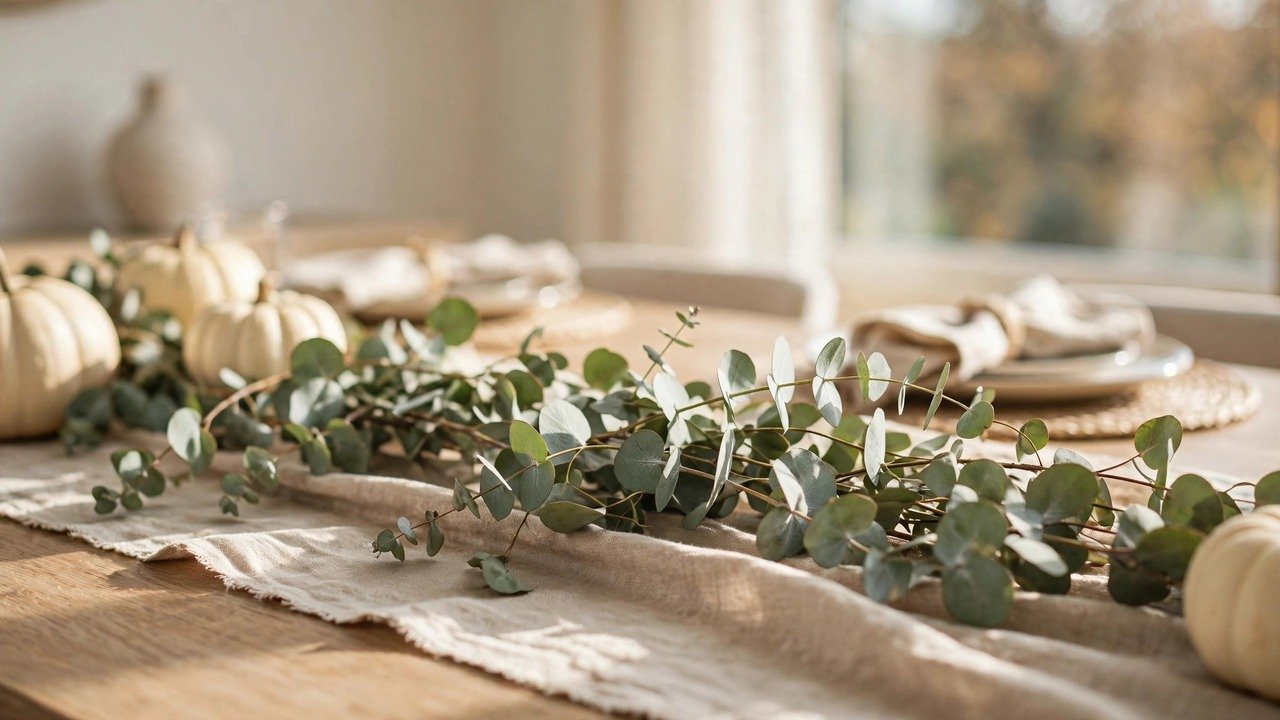
In the image below, loose silver-dollar eucalyptus stems are woven into a low garland along the table center, airy and unstructured, lying directly over the linen runner. There’s no wire frame, no foam block, no florist involved — just stems laid in a loose line with their round silver-green leaves overlapping naturally. Unstructured is the luxury here. A garland that looks gathered rather than constructed feels modern and expensive.
This suits the host who wants greenery without the fuss of a real floral arrangement — and without the color noise that green garlands can add. Silver-dollar eucalyptus reads almost gray-green, which keeps the neutral palette intact. Why it works: the horizontal line draws the eye along the table, making even a small table feel abundant. To recreate this look, buy two or three bunches of fresh eucalyptus, lay them end to end down the runner, and let the stems overlap loosely.
READ MORE >> 15 Fall Table Decor Ideas That Are All in the Small Decisions
Wheat Bundles That Double as Place Cards
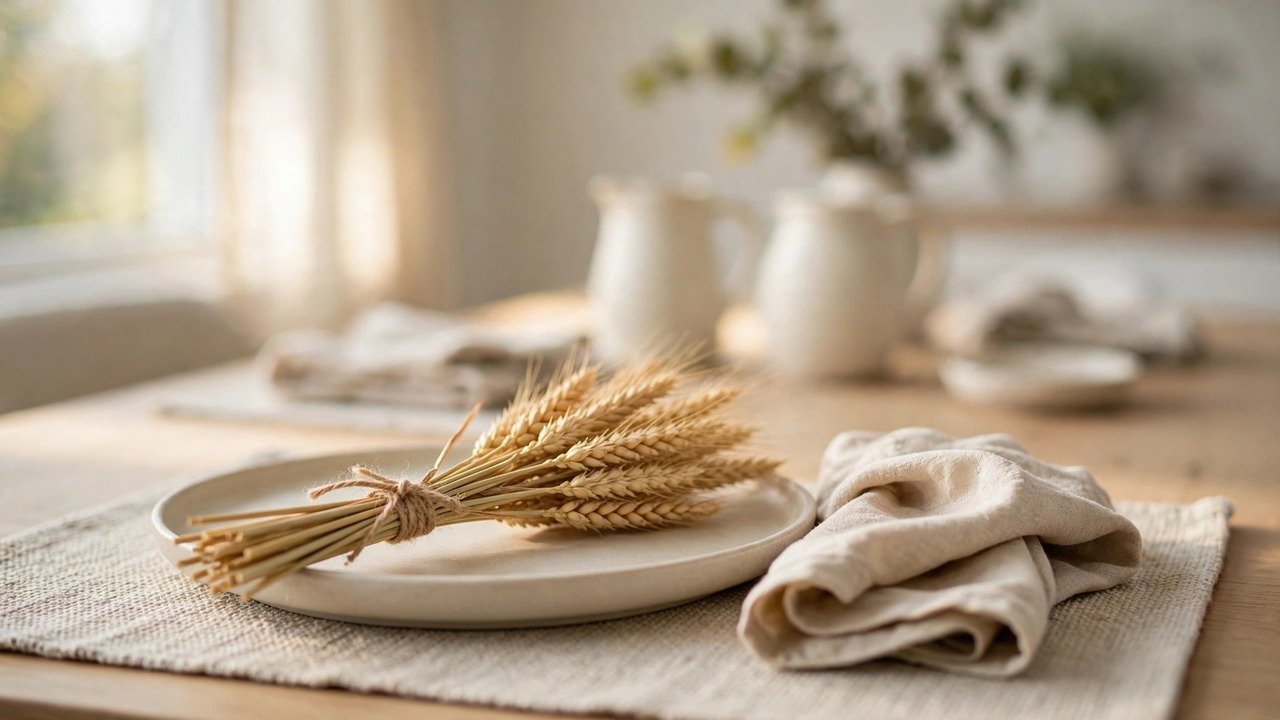
The image below shows small tied bundles of dried wheat laid across each cream plate, doubling as place cards, all sitting on oatmeal-colored placemats. Each bundle is just a handful of wheat stalks bound with twine — but placed on the plate like a little gift, it transforms an ordinary setting into something thoughtful. One object, two jobs. The wheat is both the decoration and the place card (tuck a small kraft tag under the twine with a guest’s name).
This look suits you if you love hosting and want guests to feel considered the moment they sit down. Why it works: the golden wheat tone is the only warm color note on the table, so it pops gently against all the cream and oatmeal without breaking the neutral spell. To recreate this look, divide dried wheat bunches into handfuls of five to seven stalks, tie each with natural jute twine, and trim the stems so each bundle sits neatly across a dinner plate.
An Ivory Taper Trio
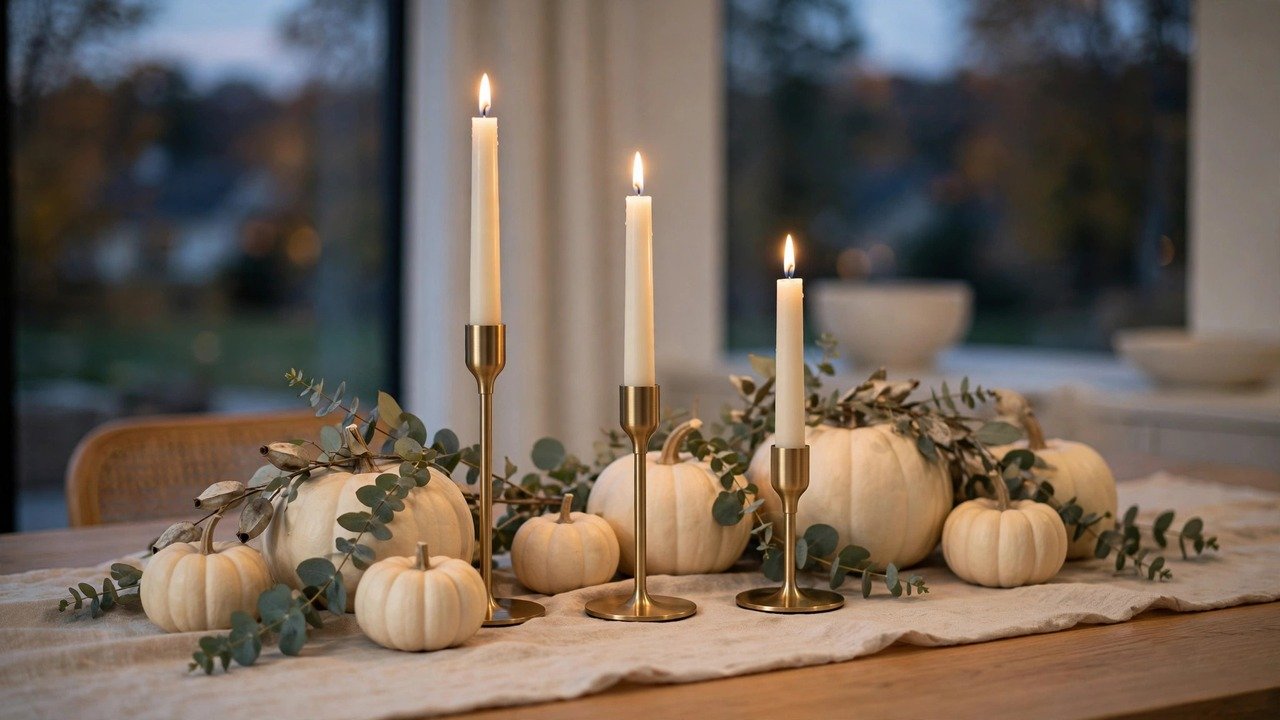
In the image below, three ivory taper candles of staggered heights stand in slender brass holders, lit, their glow warming the centerpiece around them. The brass is brushed, not shiny, and the tapers are ivory rather than stark white, which keeps them in the neutral family. Staggered heights are non-negotiable. Three identical candles in a row look like a hotel buffet; three tapers at different heights look like a stylist arranged them.
This idea suits evening hosts — anyone serving dinner after sunset, when candlelight does half the decorating for you. Why it works: the vertical lines of the tapers lift the eye above the low centerpiece, adding height without blocking conversation, and brass warms up an otherwise cool-neutral table. To recreate this look, choose holders in brushed or antique brass (avoid polished gold, which can look harsh), and light the candles about twenty minutes before guests arrive so the wax settles into that soft, lived-in glow.
Pampas Grass in a Statement Vase
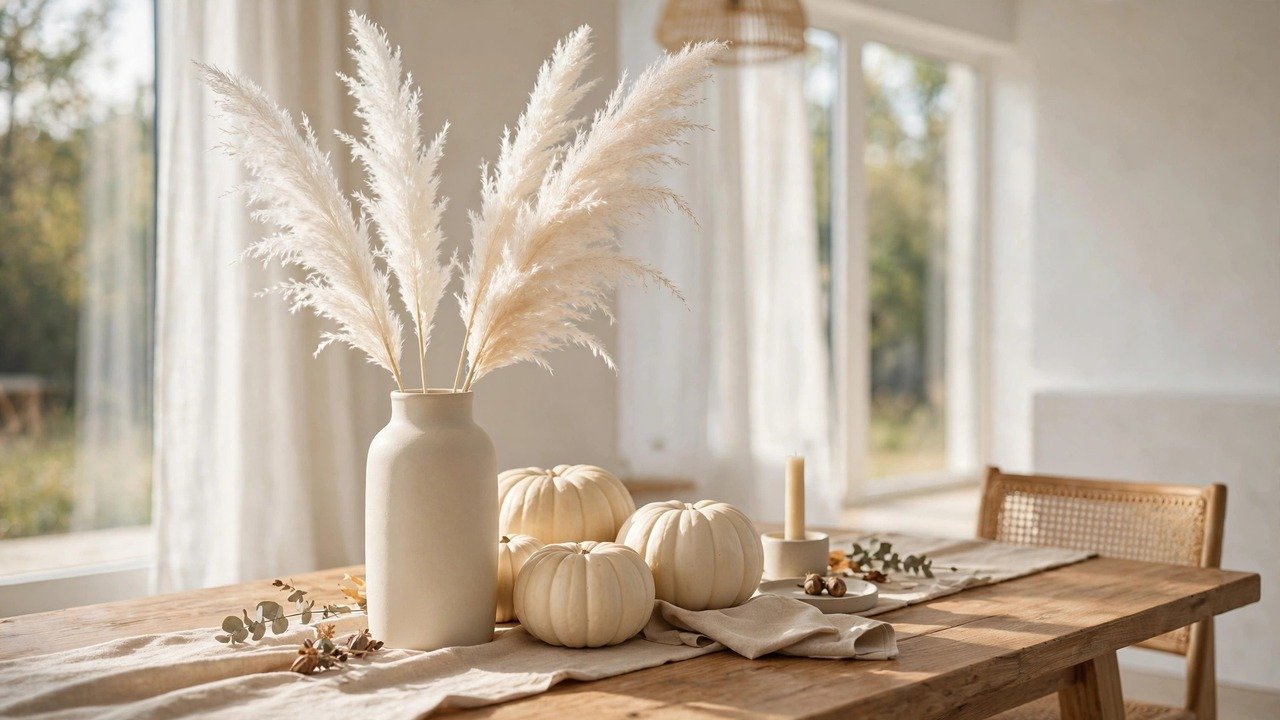
The image below shows a tall matte ceramic vase filled with tall white dried pampas grass plumes, placed off-center as the tablescape’s height moment. The vase is simple — no pattern, no glaze shine — and the pampas plumes rise well above everything else on the table, feathery and pale. One tall moment changes everything. A single vertical accent gives the whole arrangement a focal point and makes the table look designed rather than decorated.
This suits you if your dining area has high ceilings or you want the table to read as a real centerpiece from across the room. Why it works: the off-center placement feels artistic and modern — centered would be formal, but slightly to one side is editorial. To recreate this look, pick a vase with a narrow neck (it holds the plumes upright without flopping) and use five to seven stems for fullness, placed about a third of the way down the table.
Layered Chargers in Natural Texture
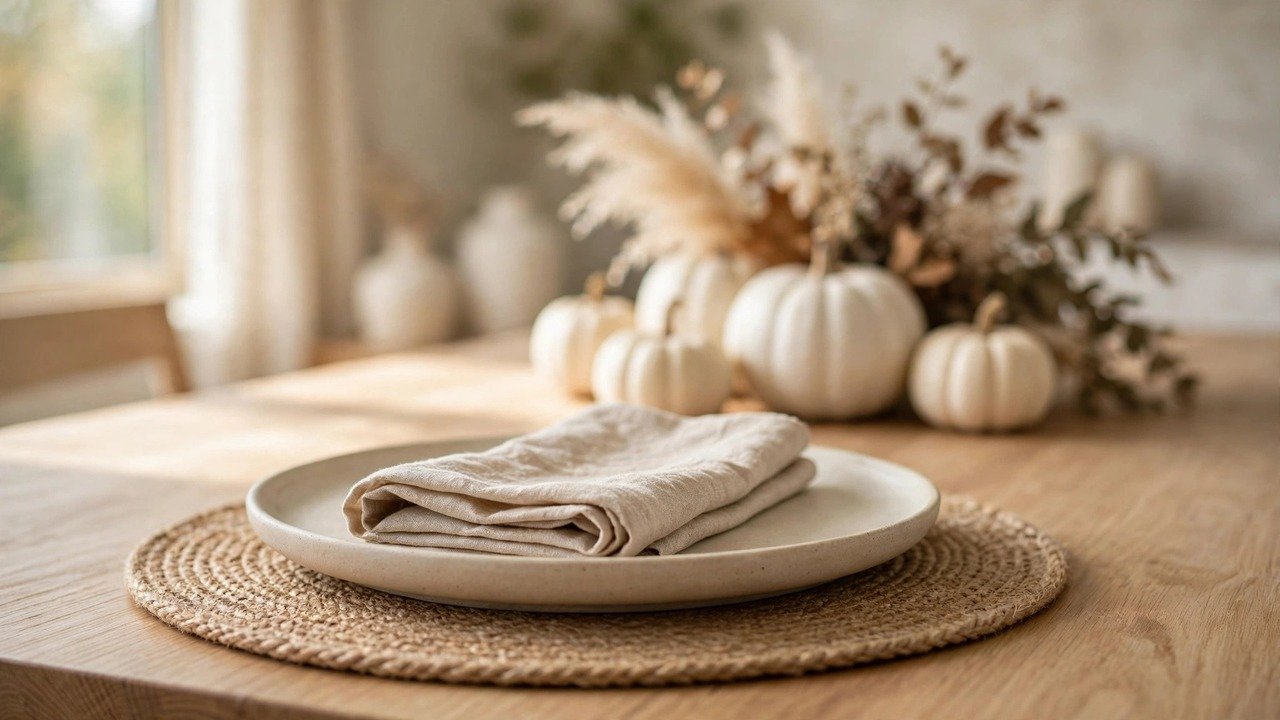
In the image below, round woven jute and rattan chargers sit under matte cream stoneware plates, with beige linen napkins folded on top. The chargers add the biggest texture hit on the table — that nubby, handwoven surface against smooth stoneware. Texture is the neutral palette’s color. When you’re working without bold hues, the difference between rough jute, matte ceramic, and soft linen is what keeps the table interesting.
This idea suits anyone who already owns simple cream or white plates and wants them to look new again — chargers are the fastest table refresh there is. Why it works: the layered circle-on-circle composition looks abundant and intentional, like a restaurant table, even with the simplest dishes. To recreate this look, choose chargers about an inch wider than your dinner plates and keep the weave natural and unbleached.
READ MORE >> 14 Fall Kitchen Ideas That Bring the Harvest Home Without a Renovation
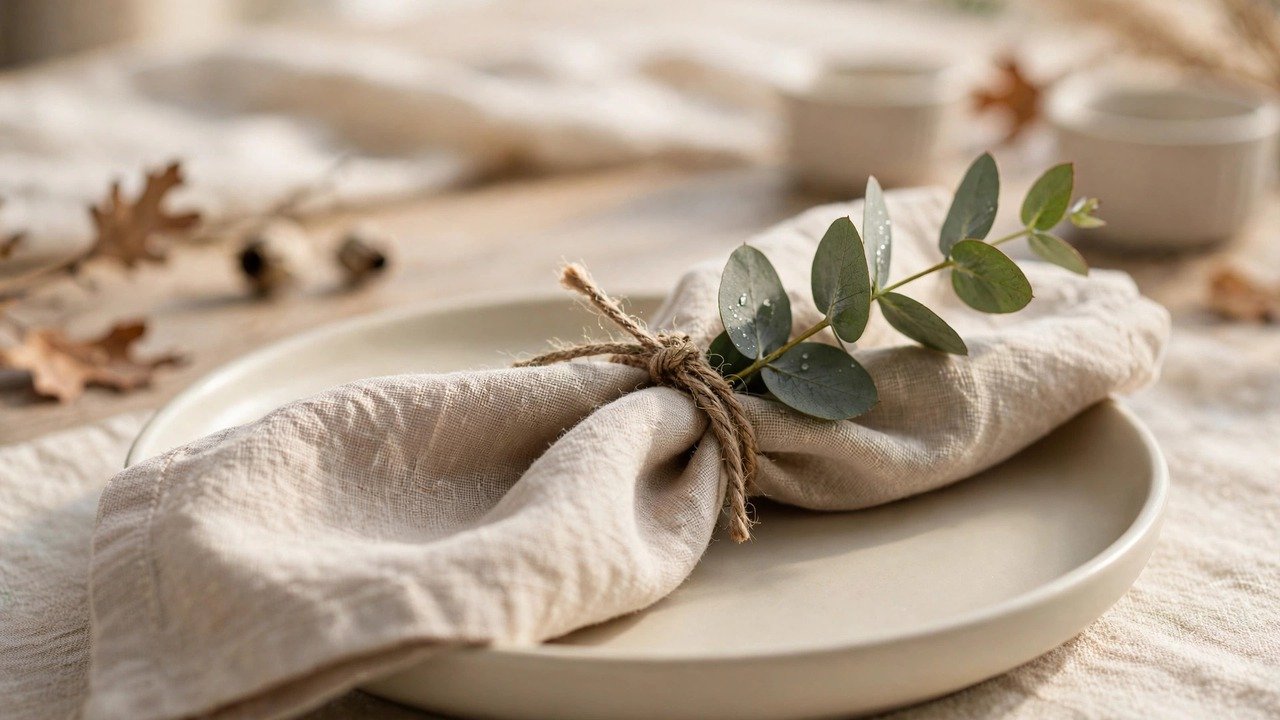
Napkins Tied With a Eucalyptus Sprig
The image below shows beige linen napkins simply tied with twine and tucked with a fresh eucalyptus sprig, resting on each plate. It’s the smallest detail on this list and somehow one of the most effective — that little green-gray sprig against the beige linen looks like something from a styled shoot. Small, repeated details read as luxury. When every single place setting carries the same tiny flourish, guests register the care without you having to say a word.
This suits the detail-lover who enjoys the last ten minutes of table styling — the fiddly, satisfying part. Why it works: repetition is what separates “decorated” from “designed”; one sprig is a garnish, eight sprigs is a concept. Fold napkins into a simple rectangle, wrap the twine twice around the middle, and slide one short eucalyptus stem under the knot — do them all assembly-line style.
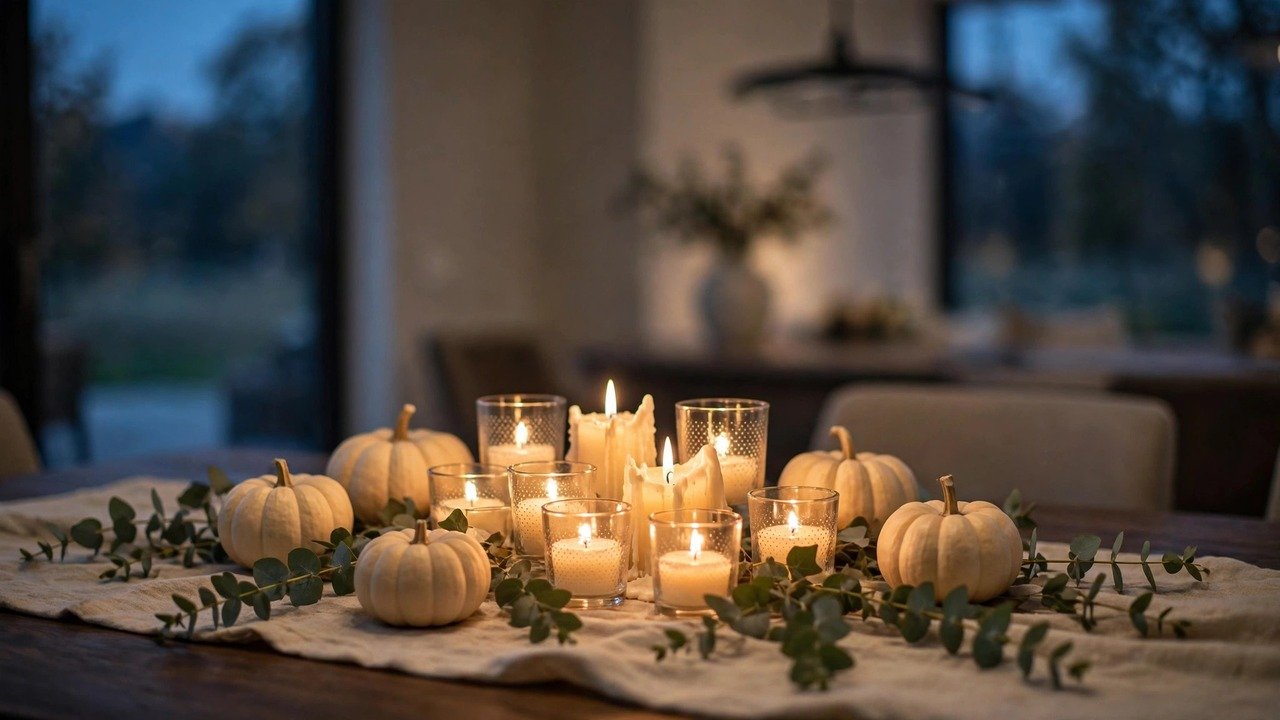
Candlelight, Gathered Low
In the image below, a cluster of glass votive holders and short pillar candles sits at the table’s center, all lit, casting a warm evening glow across the cream pumpkins around them. Everything is low, so the light pools across the table surface instead of rising above it. Group candles; never scatter them. A tight cluster of five to seven flames at the center creates one glowing heart for the table.
This idea suits anyone hosting dinner in the evening, when the light itself becomes the main decoration. Why it works: warm candlelight flatters every neutral tone on the table — creams glow golden, linen looks softer, brass picks up little sparks of light. To recreate this look, mix glass votives with one or two short pillars for height variety, keep them in a rough circle no wider than a serving platter, and use unscented candles so the fragrance doesn’t compete with dinner.
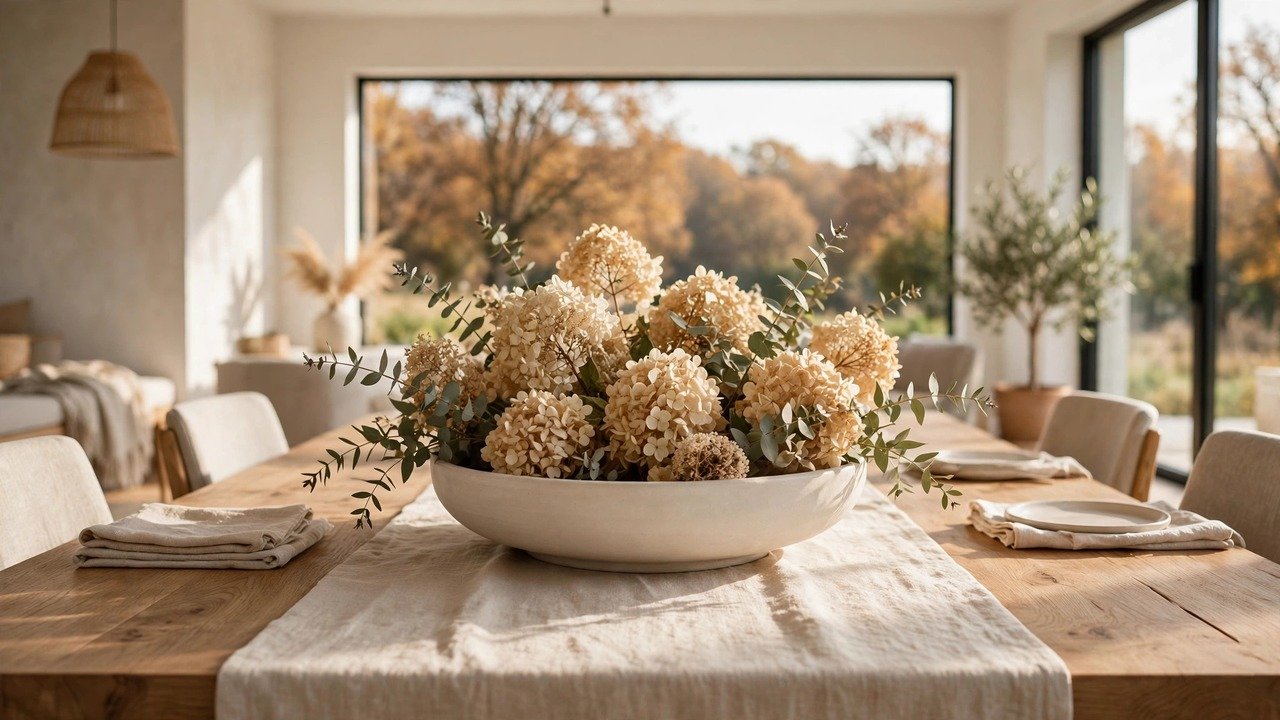
A Bowl of Dried Cream Hydrangeas
The image below shows a wide, shallow bowl filled with dried cream-colored hydrangea heads, low enough to talk across, with eucalyptus tucked in between the blooms. Dried hydrangeas have this papery, vintage texture that fresh flowers can’t touch — and in cream, they’re the perfect neutral “floral” for fall. Dried beats fresh for fall tables. Fresh flowers wilt by dessert; dried hydrangeas look exactly as good at the end of the night — and you can use them again next year.
This suits you if you want a floral moment without the weekly flower-shop run or the color chaos of a mixed bouquet. Why it works: the wide, low bowl keeps sightlines open across the table, while the mounded blooms give you that lush, abundant shape. Choose a bowl at least twice as wide as it is tall, pack the hydrangea heads in tightly so no bowl shows through, and tuck eucalyptus into any thin spots.
READ MORE >> 16 Small Fall Porch Decor Ideas That Make a Big Impact
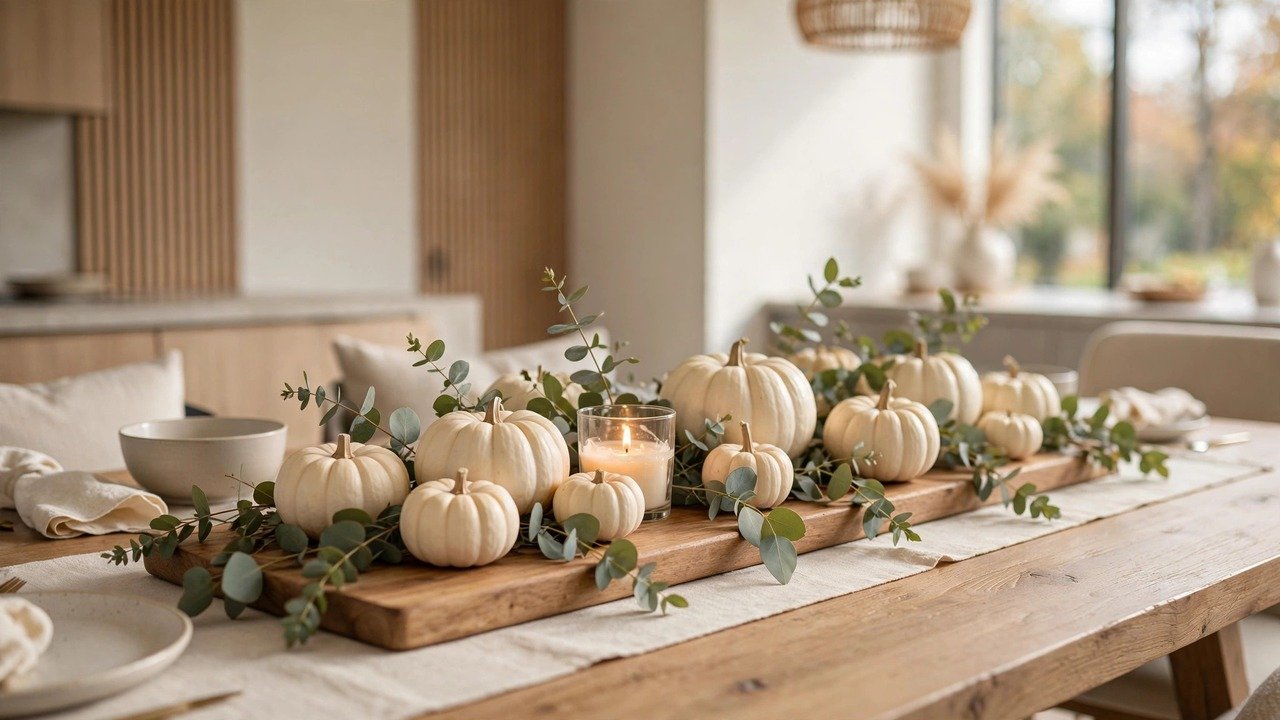
The Wooden Board Display
In the image below, a long natural wood cutting board is layered with mini white pumpkins, a small candle, and eucalyptus as a casual centerpiece runner. It’s the most relaxed idea on this list — the board you already own becomes the tray that corrals everything into one tidy, movable arrangement. Corral the clutter. A tray or board turns a scattered collection of objects into a single composed moment, which is the fastest trick in styling.
This suits the casual host whose style is more farmhouse-cozy than formal — and anyone who needs the centerpiece gone fast when it’s time to serve. Why it works: because the whole arrangement sits on one board, you can lift the entire centerpiece off the table in five seconds. To recreate this look, pick your longest board, arrange the minis and candle along it first, then fill gaps with eucalyptus sprigs until it looks full but not crowded.
Stoneware and Brass, Side by Side
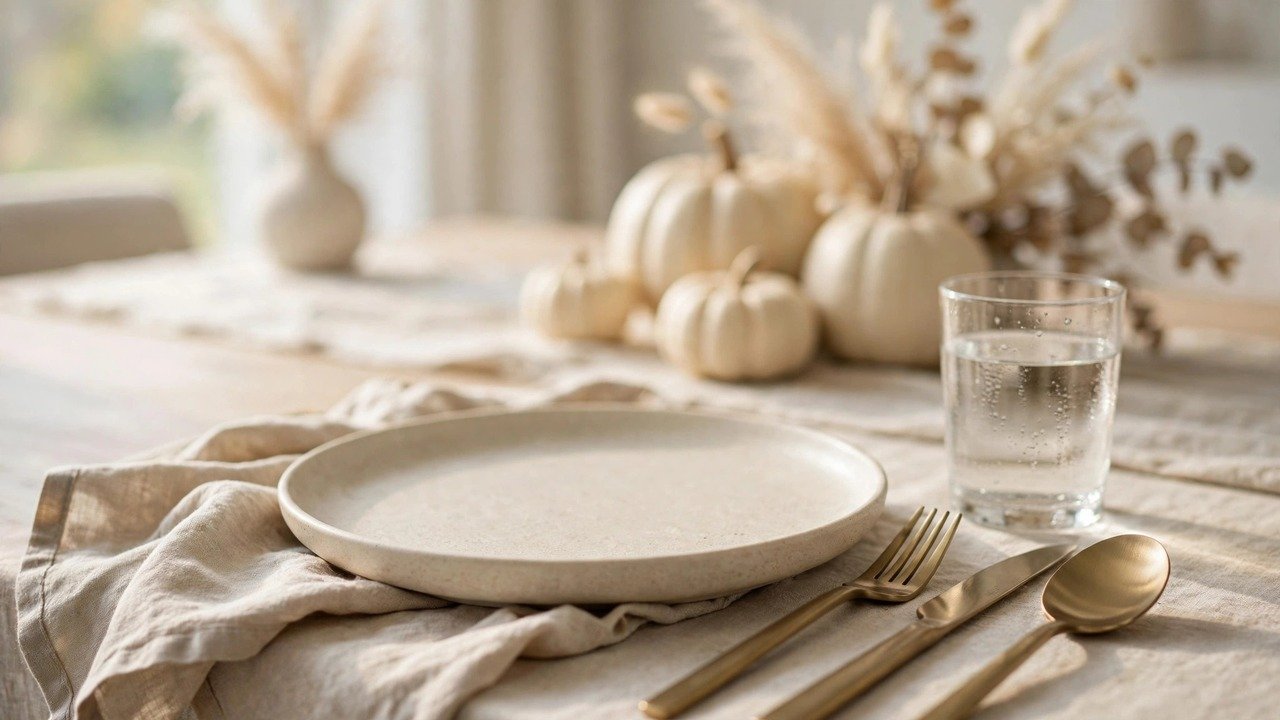
The image below shows a place setting of matte cream stoneware plates paired with brushed-brass flatware and a simple glass of water. No charger, no fuss — just beautiful materials doing the work. The stoneware has that handmade, slightly imperfect quality, and the brushed brass flatware glows softly next to it without shouting. Let the materials be the decoration.
This idea suits the minimalist who finds traditional table styling fussy — you’d rather invest in pieces you use daily than in seasonal decor. Why it works: the warm metal against matte ceramic is a study in contrast — cool and warm, rough and smooth. To recreate this look, keep everything else on the table minimal so the place setting stays the star, and polish brushed brass gently (not to a mirror shine — the soft patina is what keeps it modern).
Round Oatmeal Placemats Under Everything
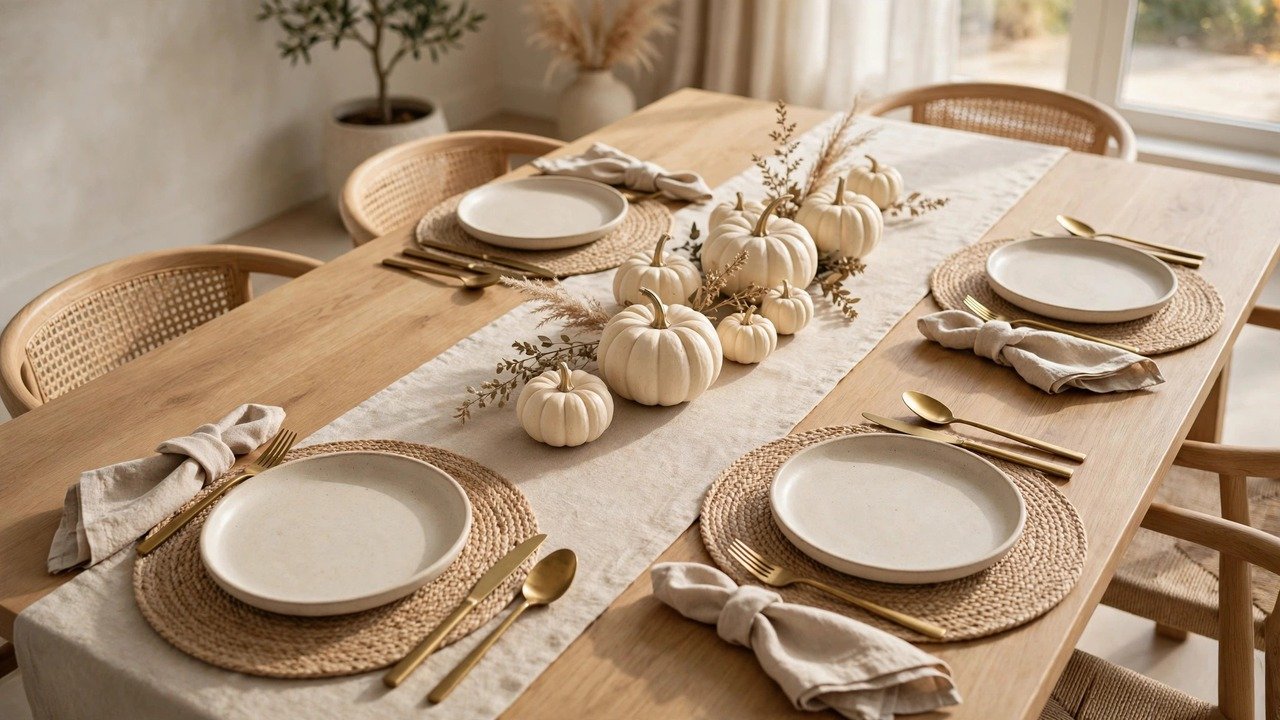
In the image below, round woven oatmeal-jute placemats sit under each full setting, adding warm texture beneath the cream plates. The round shape is doing quiet work here — against a rectangular table, those circles soften every line on the table. Shape contrast is a secret weapon. Most tables are all straight lines; introducing rounds underneath every setting breaks the geometry in the most pleasing way.
This suits you if your table feels a bit stark or “flat” even when it’s set — placemats add a finished layer that makes the whole table look considered. Why it works: the oatmeal-jute weave echoes the linen runner and napkins, so every layer speaks the same warm, natural language. Choose placemats at least 15 inches across so the plate sits comfortably with a visible border, and keep them natural and unbleached.
Your Turn to Set a Quietly Expensive Table
Here’s the real secret: the “quietly expensive” look isn’t about money at all — it’s about restraint. A limited palette, repeated details, natural textures, and the confidence to stop before the table gets crowded. Pick three or four ideas from this list and layer them on one linen runner.
And a neutral fall table is the most forgiving kind to build — everything in the cream-beige-linen family gets along, so you truly can’t clash. Start with the runner, add your pumpkins, light the candles, and enjoy the calmest, prettiest table of the season.
Shop This Look
As an Amazon Associate I earn from qualifying purchases.
Everything above comes together with a few simple pieces — a beige runner, creamy white pumpkins, eucalyptus and pampas grass, and warm candlelight. These are the exact kinds of pieces used across the thirteen ideas.
- Artoid Mode Beige Cotton Linen Table Runner — the soft beige base layer for the runner ideas above.
- Winlyn 7-Piece White Artificial Pumpkin Set — the creamy white pumpkins in the centerpiece ideas; realistic, reusable every fall.
- FEQO 36-Pack Silver Eucalyptus Stems — soft greenery to weave through a neutral tablescape without adding color noise.
- White Dried Pampas Grass (20 Stems) — tall airy texture for the centerpiece height in the vase ideas.
- Keliperry 6-Pack Fall Scented Candles — the warm candlelight glow from the evening-table ideas.