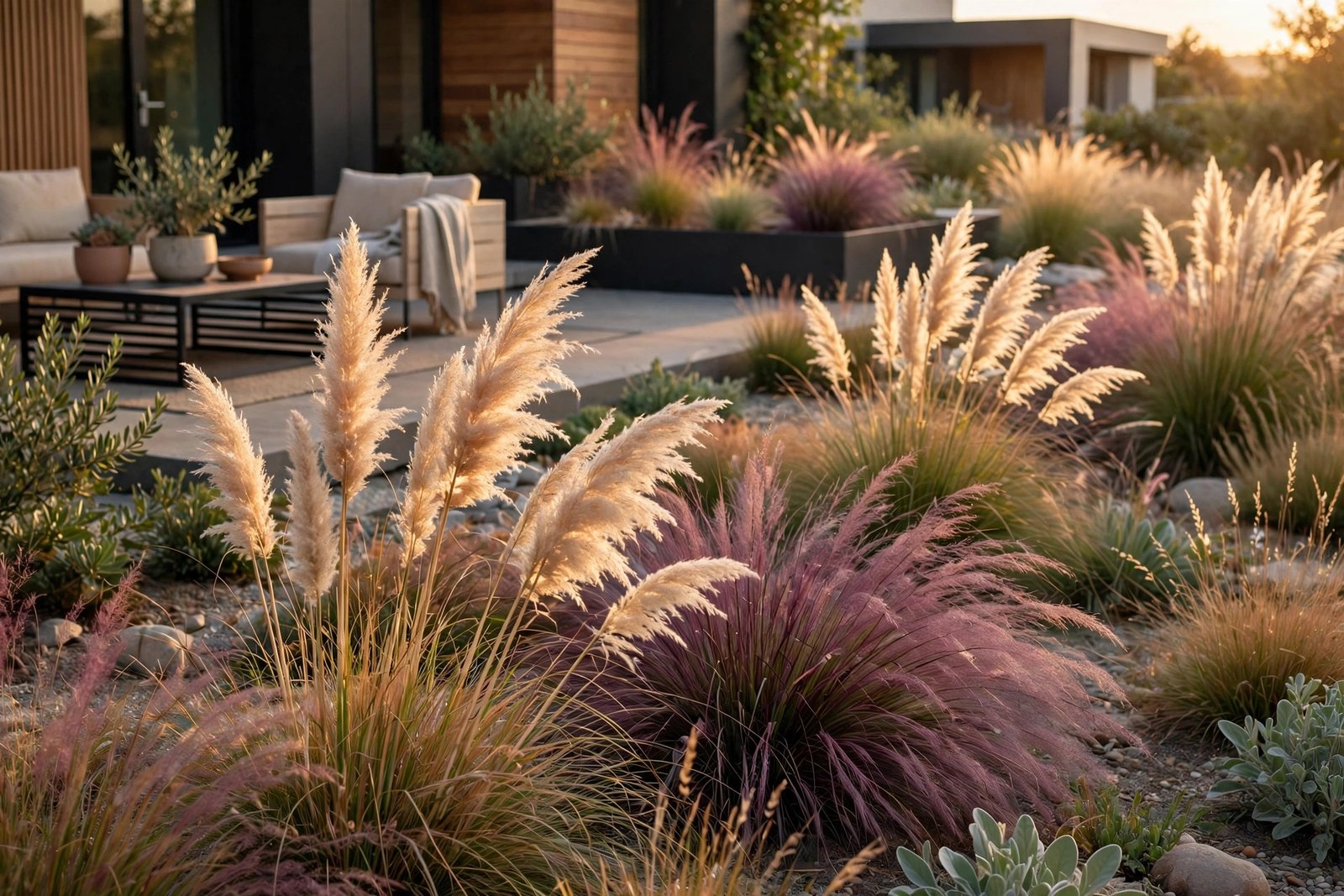
There is a quiet magic in a garden that moves. When a breeze rolls through and every stem sways in unison, the whole space feels alive — softer, calmer, and somehow more luxurious. That is the power of ornamental grasses. These graceful plants have quietly gone from garden afterthought to landscape star, and once you see what they can do for your outdoor space, you may wonder why you waited so long. If you have been searching for a way to give your yard that effortlessly styled, magazine-worthy feel, ornamental grasses might be the single easiest upgrade you can make.
In this guide, we will explore the best varieties for every style and climate, where to place them for maximum impact, how they carry your garden through all four seasons, and the simple care routine that keeps them looking their best. Whether you have a sprawling backyard or a compact patio, you will find ideas here that work for real life — not just show gardens.
Why Ornamental Grasses Are a Landscape Game-Changer
Ornamental grasses bring something to a garden that few other plants can: movement, texture, and sound. Their arching blades catch the light in a way that flat-leaved plants simply cannot, creating layers of shimmer from morning to golden hour. They add height without bulk, softness without fuss, and structure that lasts from the first warm days of spring right through the frost of winter.
They are also remarkably forgiving. Most ornamental grasses are drought-tolerant once established, resist deer and rabbits, and ask for far less feeding and fussing than roses or hydrangeas. For busy homeowners who want a beautiful garden without a part-time job, that combination of high impact and low maintenance is hard to beat.
Best Ornamental Grass Varieties for Every Garden Style
With hundreds of varieties available, choosing can feel overwhelming. Here is a curated shortlist of proven performers, grouped by the look they create.
Tall and Dramatic: Statement Grasses
When you want a plant that anchors a bed or frames a view, reach for the tall grasses.
- Pampas grass (Cortaderia selloana): The iconic showstopper with tall, feathery plumes that glow in late-summer light. Plant it where it has room — it can reach 8 to 10 feet. Best in warmer climates (USDA zones 7–10).
- Maiden grass (Miscanthus sinensis): A classic with upright, fountain-like form and silvery seed heads that persist into winter. Cultivars like ‘Gracillimus’ and ‘Morning Light’ offer finer textures for smaller spaces.
- Giant reed (Arundo donax): Bold, bamboo-like stems for a tropical or resort feel. Give it space and a watchful eye, as it can spread in warm regions.
Medium and Mounding: The Workhorses
These grasses sit comfortably in the middle layer of borders and look good nearly year-round.
- Fountain grass (Pennisetum alopecuroides): Soft, bottlebrush-like plumes on graceful arching mounds. ‘Hameln’ is compact and perfect for edging paths; the purple-leafed Pennisetum setaceum ‘Rubrum’ adds rich burgundy color.
- Switchgrass (Panicum virgatum): A tough native grass with airy seed heads. ‘Shenandoah’ turns wine-red in fall, while ‘Northwind’ stands tall and columnar even under snow.
- Korean feather reed grass (Calamagrostis brachytricha): Fluffy, pink-tinged plumes in late summer that light up the back of a border.
Short and Textural: Edging and Groundcover Grasses
Small grasses are the finishing touch — the thread that ties a planting together.
- Blue fescue (Festuca glauca): Tight, icy-blue tufts that look stunning spilling over stone or gravel. Loves sun and sharp drainage.
- Mondo grass and liriope: Technically grass-like perennials, these evergreen tufts make excellent low borders along paths and patios.
- Japanese forest grass (Hakonechloa macra): Cascading mounds of soft gold or green foliage that thrive in shade — a rare find among grasses.
Placement Ideas That Redefine Your Outdoor Space
Where you plant ornamental grasses matters as much as which ones you choose. Here are placement strategies landscape designers use to create that polished, intentional look.
Create a Living Privacy Screen
A row of tall grasses like maiden grass or pampas grass makes a privacy screen that feels airy rather than fortress-like. Space plants about 3 to 4 feet apart so their plumes merge into a soft, swaying wall. Unlike a fence, it rustles in the breeze and changes with the seasons — privacy with personality.
Frame Entrances, Patios, and Pathways
Flank a front door, garden gate, or patio steps with matching grasses in large pots or planted pairs. The symmetry reads as instantly “designed,” while the soft texture keeps it welcoming. Fountain grass in oversized planters is a foolproof formula: one plant per pot, and let it take center stage.
Soften Hard Edges and Structures
Retaining walls, fence lines, and the base of a deck can look harsh and unfinished. Medium grasses planted along these edges blur the lines and make structures feel settled into the landscape. Blue fescue spilling over a stone wall edge is a particularly lovely combination.
Build a Four-Season Meadow Border
Group grasses of different heights, colors, and bloom times in a deep border for a naturalistic, meadow-style planting. Mix warm-season grasses (miscanthus, switchgrass) with cool-season ones (blue fescue, feather reed grass) so something is always at its peak. Add flowering perennials like coneflowers and black-eyed Susans for color contrast — the grasses’ fine texture makes bold flower heads pop.
Seasonal Interest: Beauty That Never Takes a Break
One of the strongest arguments for ornamental grasses is their year-round performance. Few plants earn their keep in every season, but grasses do.
- Spring: Fresh green blades emerge quickly, and a simple cut-back (more on that below) gives you a clean slate. Early growth pairs beautifully with spring bulbs.
- Summer: Grasses reach their full, lush size. Many begin to bloom, sending up plumes and seed heads that dance in warm breezes.
- Fall: This is peak season. Foliage turns gold, copper, burgundy, and bronze, and seed heads catch the low autumn light like lanterns.
- Winter: Leave the dried grasses standing. Frost and snow outline every blade, creating sculpture in the garden when little else is happening. They also provide shelter for birds and beneficial insects.
Designer tip: Resist the urge to cut grasses back in fall. Their winter structure is half their value — and one of the most photographed looks on Pinterest is frost-dusted grass plumes at sunrise.
Maintenance Tips for Effortless, Healthy Grasses
Ornamental grasses are famously low-maintenance, but a few simple habits keep them looking their best.
The Once-a-Year Haircut
Almost all deciduous ornamental grasses need just one major task per year: cutting them back in late winter or very early spring, before new growth starts. Cut the old foliage to about 4 to 6 inches above the ground. Wear gloves and long sleeves — some grasses have sharp blade edges — and use sharp shears or a hedge trimmer for large clumps.
Watering and Feeding
Water new plantings regularly for the first season. After that, most established grasses are quite drought-tolerant and prefer to be on the dry side. Skip the fertilizer — rich soil and heavy feeding produce floppy, weak growth. Grasses actually look better and stand up straighter in lean soil.
Dividing Overgrown Clumps
Every 3 to 4 years, large clumps may develop a dead center or simply outgrow their space. Divide them in early spring: dig up the clump, slice it into sections with a sharp spade, and replant. It is the easiest way to get free plants for other parts of the garden — or to share with neighbors.
Pest and Disease Watch
Ornamental grasses have few serious problems. Occasional rust or leaf spot can appear in humid climates; improve air circulation and avoid overhead watering to prevent it. Deer and rabbits generally leave grasses alone, making them a reliable choice for gardens plagued by nibblers.
Pairing Grasses With Other Plants
Grasses are team players. Their fine, linear texture contrasts beautifully with broad-leaved plants and bold flowers. Try these combinations:
- Grasses + coneflowers and salvias: The classic prairie pairing — fine grass texture against bold, colorful blooms.
- Grasses + lavender or Russian sage: Silvery foliage and purple flowers with swaying grass plumes create a dreamy, Mediterranean mood.
- Grasses + evergreen shrubs: Boxwood, yew, or juniper provide a dark green backdrop that makes grass plumes and fall color glow.
- Grasses + boulders and gravel: In modern or Japanese-inspired gardens, grasses with stone and gravel mulch look sculptural and serene.
- Grasses + ornamental trees: Plant grasses in drifts under multi-stem trees like Japanese maples or crape myrtles for a layered, woodland-edge feel.
Frequently Asked Questions
Are ornamental grasses invasive?
Some can be. Pampas grass self-seeds aggressively in warm climates, and ribbon grass spreads by runners. The solution is simple: choose clump-forming (not running) varieties, and look for sterile cultivars that do not produce viable seed. Your local nursery can point you to well-behaved options for your region.
Do ornamental grasses need full sun?
Most do best in full sun — at least six hours a day. In too much shade, grasses grow floppy and rarely bloom. The happy exceptions are shade-tolerant choices like Japanese forest grass, tufted hair grass, and many sedges, which thrive where other grasses struggle.
How fast do ornamental grasses grow?
Faster than you might expect. Most grasses reach near-mature size in their second or third growing season. Warm-season grasses (miscanthus, switchgrass, fountain grass) do most of their growing in summer heat, while cool-season grasses (blue fescue, feather reed grass) grow most actively in spring and fall.
Can I grow ornamental grasses in containers?
Absolutely — and they are some of the best container plants for patios and balconies. Choose a large pot (at least 14 inches wide) with drainage holes, use a well-draining potting mix, and water more often than in-ground plantings. Fountain grass, blue fescue, and purple fountain grass are all container stars. In cold climates, move tender varieties to a sheltered spot for winter.
Conclusion
Ornamental grasses are one of those rare garden investments that pay off in every season, ask for almost nothing in return, and instantly make a landscape look intentional and artful. A few well-chosen grasses can soften a fence, frame a patio, add winter sculpture, and fill your garden with movement and light — all for the price of a plant or two and one haircut a year.
Start small if you like: a pair of fountain grasses flanking your front steps, or a drift of blue fescue along a path. Then watch how quickly you start seeing spots for more. Once grasses get into your garden, they have a way of redefining not just your landscape, but how you feel every time you step outside.