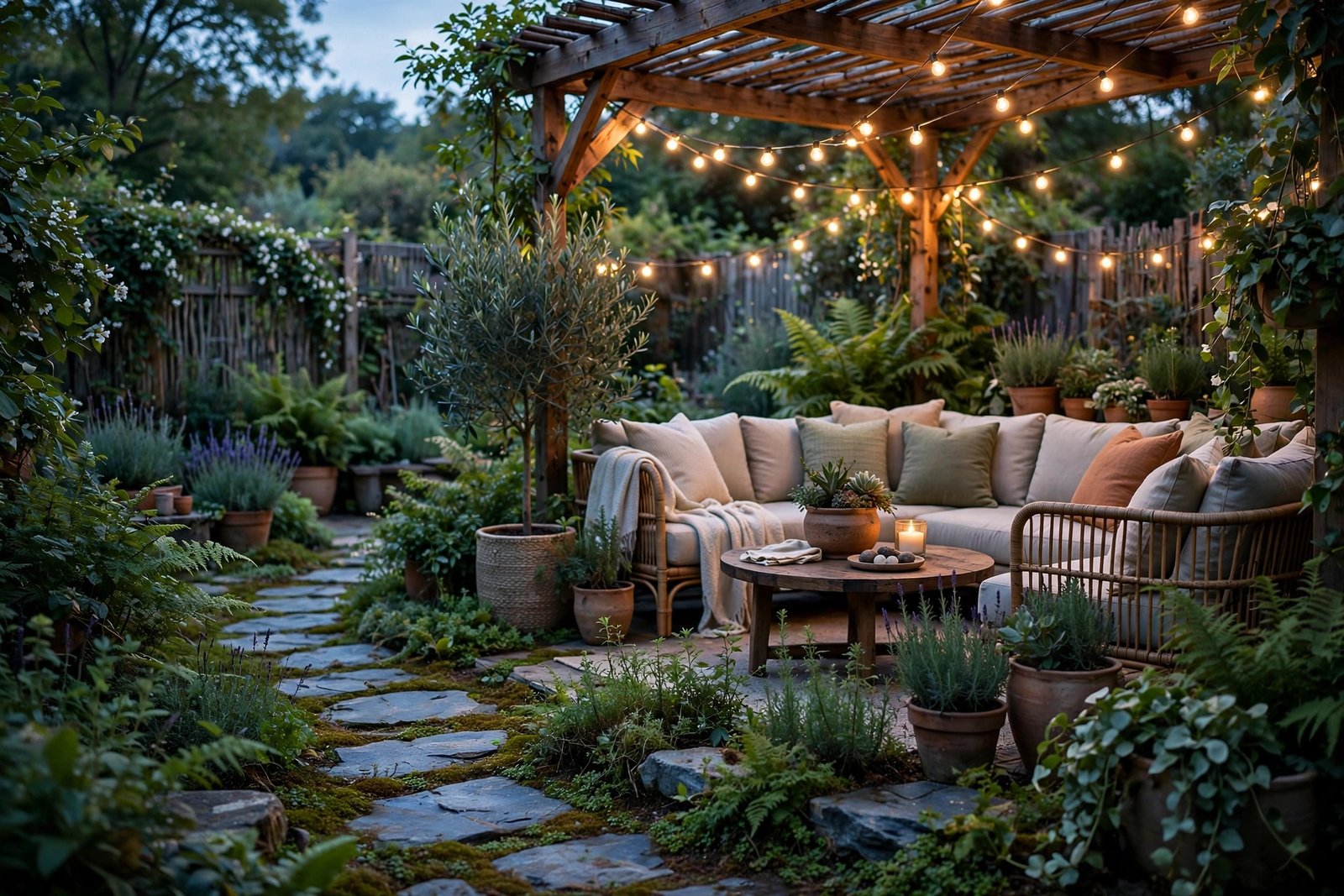
There is a special kind of magic that happens when a backyard stops feeling like just a yard and starts feeling like a destination — a place with its own mood, its own rhythm, and its own story. You step out the back door and instead of seeing lawn, fence, and obligation, you see somewhere you would happily get lost for an evening. That transformation has very little to do with square footage and everything to do with intention. Here is how to design a backyard that feels like a world of its own.
Start With a Feeling, Not a Floor Plan
Before you buy a single plant or paver, decide what your backyard should feel like. A world of its own has a point of view. Is yours a misty English garden where you read with tea? A sun-drenched Mediterranean courtyard where dinner stretches past midnight? A lantern-lit hideaway that feels like a boutique resort? When you name the feeling, every later decision — the colors, the materials, the lighting — gets easier, because you can ask: does this belong in that world?
Walk outside at the time of day you most want to use the space. Notice where the sun falls, where the wind rustles, which corners feel forgotten. The best backyard designs grow out of the yard’s own character instead of fighting it.
Divide the Space Into Zones
Open lawns feel empty; worlds feel layered. The fastest way to make any yard feel bigger and more immersive is to break it into distinct zones — outdoor “rooms,” each with its own purpose and mood. Even a small backyard can hold three or four.
The Gathering Zone
This is the social heart: a dining table, a lounge set, or a fire pit circle. Anchor it with something permanent — a rug, a paved pad, or an overhead structure like a pergola — so it reads as a room rather than furniture scattered on grass. Place it close enough to the house that carrying food out feels effortless.
The Quiet Corner
Every private world needs a retreat inside the retreat. A single chair under a tree, a hammock strung between two posts, a bench tucked behind tall grasses. This is where the yard earns its magic: a spot that feels discovered rather than designed. Keep it simple — one comfortable seat, something to look at, and a little enclosure.
The Journey Between Them
Paths are what make zones feel like a world. A winding stone or gravel path that curves out of sight creates mystery and invites wandering. Even in a small yard, a path that bends — so you cannot see its end from the start — makes the space feel twice as large.
Create Privacy and Enclosure
A world needs borders. Without a sense of enclosure, a backyard always feels like it belongs to the neighborhood. With it, the outside world disappears the moment you step out.
Layer Your Boundaries
Do not rely on the fence alone. Plant a living layer in front of it: tall ornamental grasses, a row of evergreen shrubs, or a mixed hedge. This softens hard edges and adds depth, so instead of seeing “fence,” your eye travels through foliage. For instant privacy, bamboo in raised planters or tall trellises with climbing vines like jasmine or clematis work beautifully.
Overhead Cover Changes Everything
Enclosure is not only about walls — ceilings matter just as much. A pergola, a shade sail, or even a small tree canopy over a seating area makes it feel like a room. String fabric or outdoor curtains around a pergola for a cocoon effect. The simple act of looking up and seeing something overhead instead of open sky tells your brain: you are somewhere special now.
Mind the Sightlines
Stand in your main seating area and look around. Where can the neighbors see you? Block the most direct sightlines with a strategically placed tree, a tall planter, or a lattice screen.
Use Lighting to Build Atmosphere After Dark
If your backyard only exists in daylight, you are only using half of it. Evening is when a yard truly becomes another world — and lighting is the difference between a dark backyard and an enchanted one.
Layer Three Kinds of Light
- Ambient glow: string lights overhead, lanterns on tables, or fairy lights woven through branches. This is the warm wash that makes everything feel magical.
- Task light: focused lighting where you need it — a brighter lantern near the grill, a small lamp by the reading chair, step lights along paths.
- Accent light: spotlights aimed up at trees or walls create drama and depth. One well-lit tree at night is worth more than a dozen unlit ones.
Go Warm and Low
Choose bulbs around 2700K for that golden, candlelit feel. Harsh white light kills atmosphere instantly. Place lights low — along paths, inside planters, under benches — so the glow feels like it rises out of the garden itself rather than raining down from above. Solar lanterns and rechargeable candles make this easy with no wiring.
Add Water and Sound
Nothing transports you like the sound of water. A fountain, a bubbling urn, or even a small pond adds a sensory layer that makes the yard feel like a different place — it masks traffic noise, cools the air on hot evenings, and gives the eye a living focal point.
Start Small
You do not need a waterfall feature. A self-contained ceramic fountain or a small bubbling rock in a corner bed delivers most of the effect with almost no maintenance. Place it where you will hear it from your main seating spot.
Invite Nature’s Soundtrack
Beyond water, plant for sound: ornamental grasses that rustle in the breeze, a bird feeder or birdbath that brings birdsong. A backyard that sounds alive feels like a world; a silent one just feels like a yard.
Choose Furniture and Textiles Like Rooms
Outdoor furniture is where most backyards lose their magic — mismatched plastic chairs scattered around do not transport anyone. Think of your zones as rooms and furnish them with the same care you would give an interior.
Commit to a Palette
Pick two to three colors and repeat them across cushions, throws, rugs, and planters. A restrained palette — say, sage green, cream, and terracotta — makes disparate pieces look curated. An outdoor rug under the seating group instantly anchors it as a room and adds softness underfoot.
Mix Comfort With Character
Invest in seating you genuinely want to sink into: deep lounge chairs, a daybed, or a swing. Then add character pieces — a vintage side table, a Moroccan lantern, a woven basket for blankets. Weather-resistant fabrics have come a long way, so do not be afraid of pattern; a bold print on cushions is an easy way to inject personality.
Plant for Atmosphere, Not Just Looks
Plants are the walls, ceiling, and wallpaper of your backyard world. Choose them for mood as much as for color — and plant densely enough that the garden feels lush and enveloping rather than sparse and fussy.
Think in Layers
- Canopy: one or two small trees for height and shade — a flowering cherry, a Japanese maple, or an olive tree, depending on your climate.
- Mid layer: shrubs and tall perennials that fill the middle distance and create structure year-round.
- Ground layer: dense plantings of ferns, hostas, lavender, or groundcover that make beds feel full and finished.
Engage All the Senses
Fragrant plants near seating areas are transformative — night-blooming jasmine, lavender, gardenias, or herbs like rosemary and thyme.
Repeat, Repeat, Repeat
The secret of gardens that look professionally designed is repetition. Plant the same grass, shrub, or flower in drifts and clusters throughout the yard instead of one of everything. Three kinds of plants used generously look intentional; thirty kinds used once look like a plant sale.
Practical Tips to Make It Happen
- Start with the bones. Paths, patios, fences, and trees are permanent — get those right first. Furniture and decor can evolve.
- Work in phases. Transform one zone per season instead of trying to do everything at once. The yard will still improve dramatically with each phase.
- Hide the utilities. Air conditioners, bins, and meters break the spell. Screen them with fencing panels, tall planters, or trellises with vines.
- Keep a maintenance rhythm. A lush world needs a little upkeep — but a dense planting with mulch needs far less weeding than bare soil with scattered plants.
- Add one surprise. A mirror hidden among plants, a sculpture glimpsed down a path, a mosaic set into a step. Small discoveries make a space feel storied.
Frequently Asked Questions
How much does it cost to make a backyard feel like a retreat?
Far less than most people assume. The biggest atmosphere gains come from inexpensive moves: string lights, an outdoor rug, clustered planters, and a fresh coat of paint on the fence. Add bigger elements — a pergola, a fire pit, a fountain — in later phases as budget allows.
What if my backyard is tiny?
Small yards actually have an advantage: enclosure is easier, and every change has more impact. Focus on three things: block the sightlines so it feels private, add one comfortable seating nook, and light it beautifully at night. Vertical gardening — trellises, hanging planters, wall-mounted pots — multiplies your planting space without touching the floor.
How do I keep it low-maintenance?
Choose plants suited to your climate and water conditions — native plants are your best friends. Use thick mulch, group plants densely so weeds cannot establish, and install drip irrigation if you can. Hardscaping (gravel, stone, decking) in high-traffic areas cuts mowing and mud. A world of its own should feel like an escape, not a chore list.
When is the best time of year to start?
Fall and early spring are ideal for planting, since cooler weather helps roots establish. But design work — planning zones, ordering furniture, building a pergola — can happen anytime. Many people plan in winter, build in spring, and enjoy the finished world by summer.
Your Backyard Is Waiting to Become Somewhere
Creating a backyard that feels like a world of its own is not about spending a fortune or hiring a designer — it is about making deliberate choices that engage the senses. Define your zones, enclose the space, light it for the evening, add water and sound, furnish it like rooms, and plant with abandon. Do one project this weekend — even just hanging string lights over the seating area — and you will feel the shift immediately. The world you want is already out there, past the back door. You just have to build the invitation.